Explain the research in seconds
A visitor should understand what your lab studies, and why it matters, before they scroll. Biologists, physicists and clinicians each find their way in.
A research lab website that explains your science in seconds, attracts the students and postdocs you want, and stays up to date without eating your time.
Your lab website is the first thing a prospective PhD student, a postdoc or a collaborator looks at. Often it is also the last thing anyone in the lab had time to update. Most research group websites are built from the institute's template, with the same blocks, the same grey and the same list of publications as the lab next door.
I spent more than ten years as a researcher in quantum physics before I started building websites. I know how a lab works, what a group leader needs from a website, and what the people you want to hire look for when they land on it.
A visitor should understand what your lab studies, and why it matters, before they scroll. Biologists, physicists and clinicians each find their way in.
Open positions that are easy to find, from summer interns to postdocs. Every candidate sees how to apply in seconds.
The group leader, the team, the alumni. Candidates choose a lab for its people as much as for its projects.
Hundreds of papers, sorted by year, type or topic, and shown on the profile of every lab member who wrote them.
One meeting with you, then I study your research, your papers and your talks. The website is built on what makes your lab different.
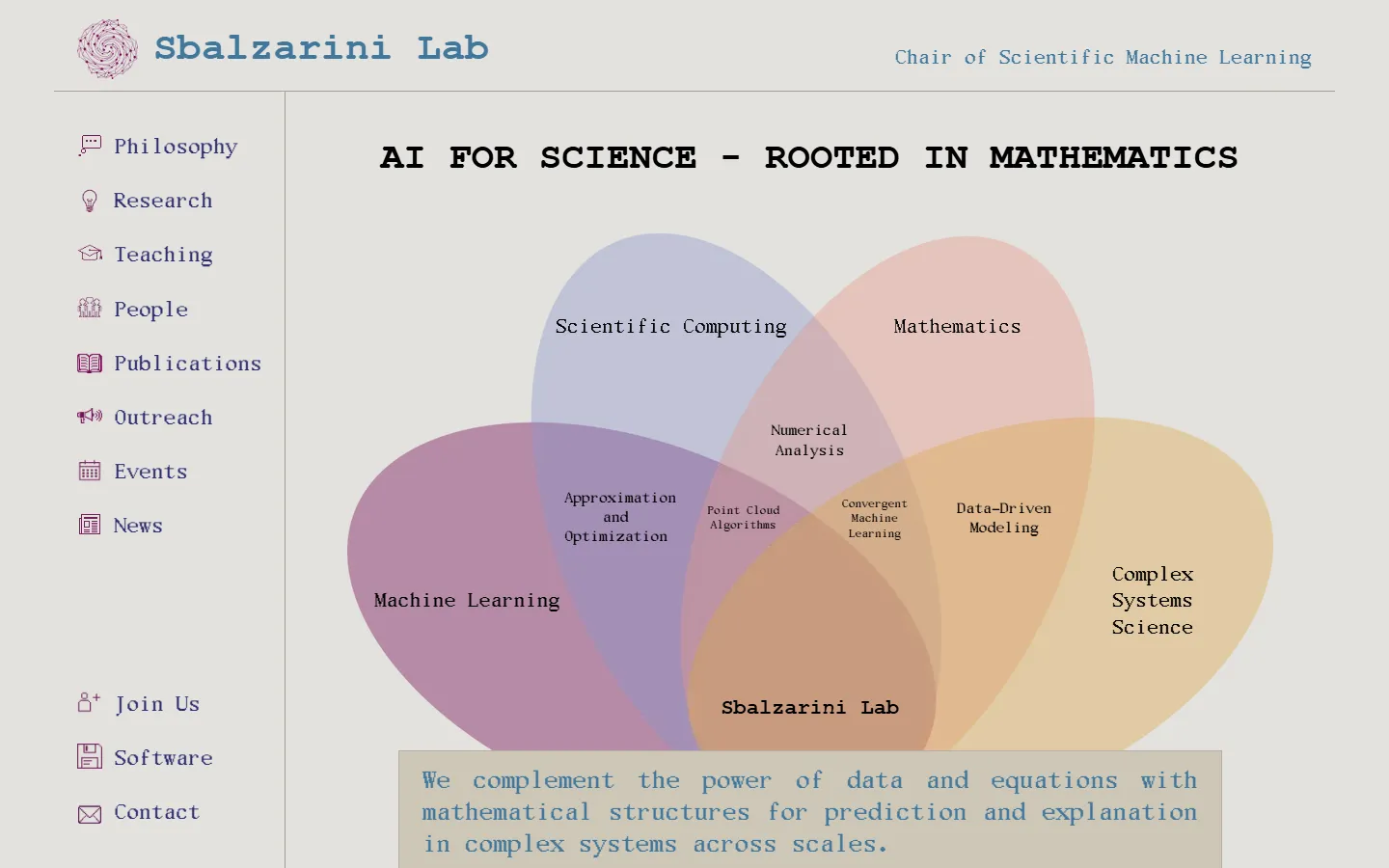
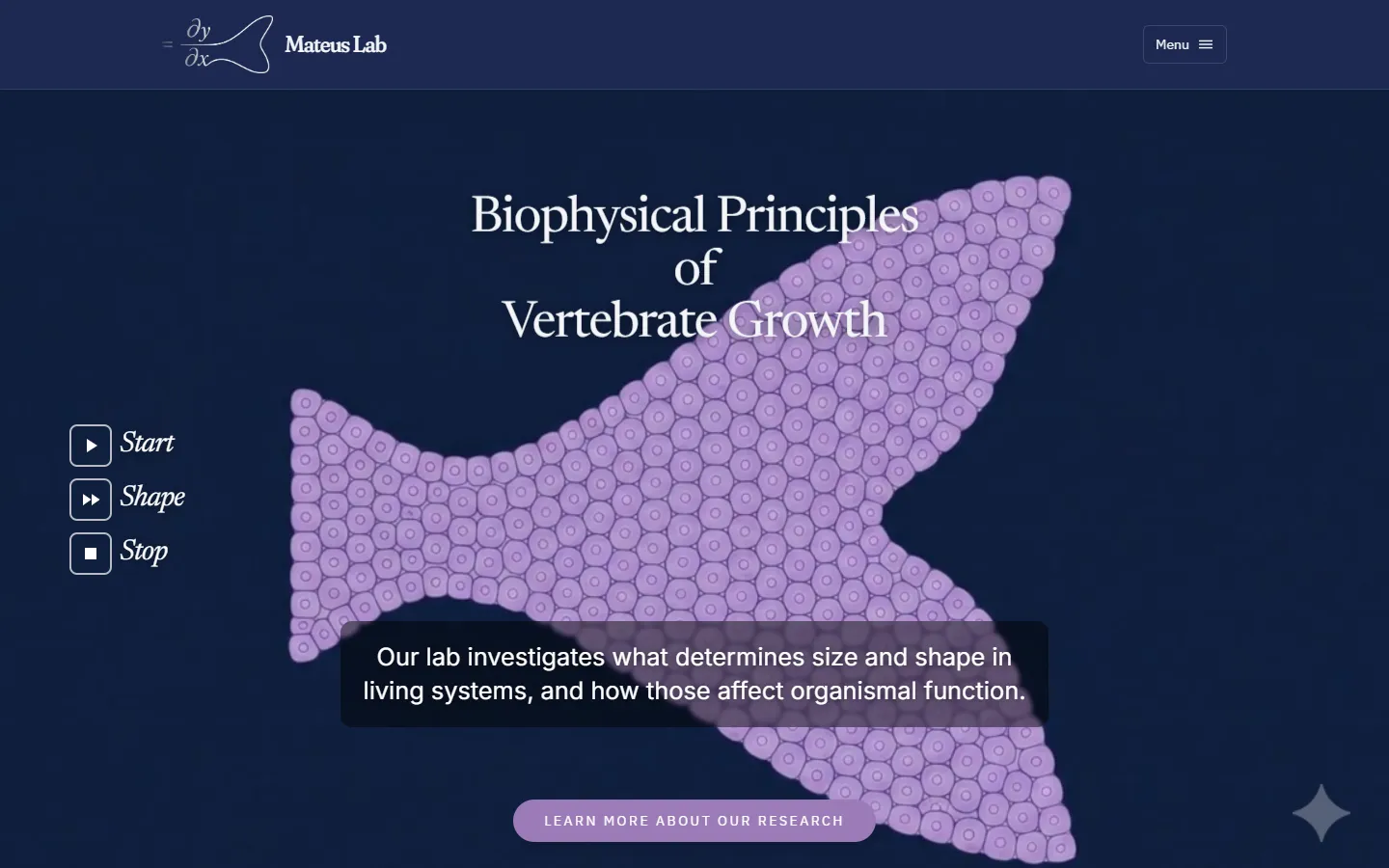
No template blocks. A look built around your science, like the player buttons of the Mateus Lab or the Venn diagram of the Sbalzarini Lab.
I help you structure the content and write it in your voice, so you don't have the burden to start from the scratch.
An admin page your lab can actually use, so a new paper or a new member is a five-minute job. Or FermiBot, which makes the change when you send it a message.
I show you how to edit your website, we check everything together, and we launch it.
Two research groups I designed websites for. Each started from a different lab and ended in a different website.
A kick-off meeting about your research and your needs, then an in-depth study of your work. Your time is limited, so one meeting is enough.
I make a first design of your lab website. We review it together and repeat until you are happy with it.
A final check, a short training on how to edit texts and pictures, and the launch.
A template is a good start if you have the time to fill it and keep it running. Free ones such as al-folio or Hugo Blox are popular with researchers. But a template looks like a template, with the same blocks as many other labs. If your website has to help you recruit and stand out, it should be built around your research.
Keep the institute page, because colleagues look there first. Your own lab website is where you decide what the world sees, and how, instead of fitting into a rigid institutional template. The two link to each other.
You, your lab manager or a student, in a few minutes, through an admin page I set up for your lab. Or nobody sits down at all, because FermiBot edits the website when you send it a chat or a voice message.
Yes. The Sbalzarini Lab website, for example, was set up on the lab's own server.
Weeks, not months. Most of the time goes into gathering the content and working out the concept, and I do much of that work for you, from reading your papers to drafting the texts.
A short summary of your research, the projects, the people, the publications, the open positions and a way to reach you. News and media if you have them. Everything else is optional, and less is often more.